
Home / Termite resources
Phoenix metro termite guide
Signs of Subterranean Termites in Arizona
A termite problem can be hard to spot early. These warning signs deserve a closer look, but they are not a substitute for an inspection.
Mud tubes along walls or foundations
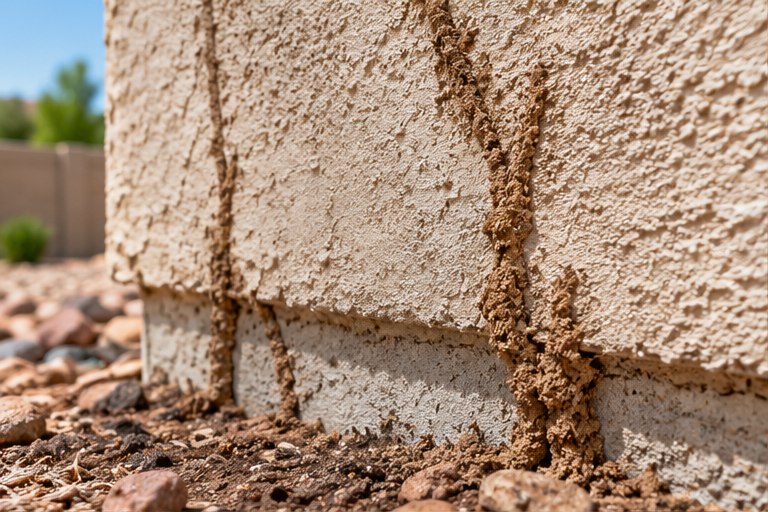
Illustrative example of soil-colored termite shelter tubes along an exterior foundation. AI-generated educational illustration; not a photograph of a Rhino Exterminating job.
Subterranean termites may build narrow earth-colored shelter tubes to travel between soil and a food source. Look around foundation edges, garage walls, and sheltered exterior surfaces. An old or empty tube is not proof of an active infestation.
Winged swarmers or loose wings
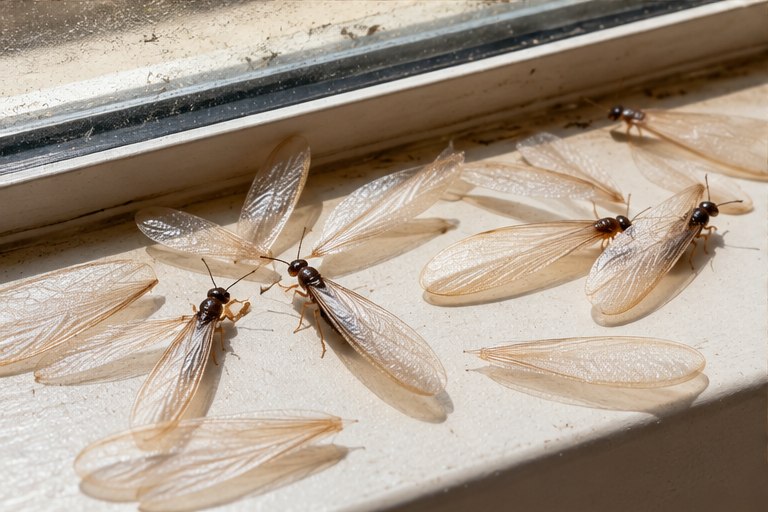
Illustrative example of discarded wings and winged termite swarmers near a window. AI-generated educational illustration; not a photograph of a Rhino Exterminating job.
Winged reproductive termites may appear during swarming periods. Shed wings around windows or doors may prompt inspection. Other insects can also have wings, so identification matters.
Wood that looks damaged or unusually hollow
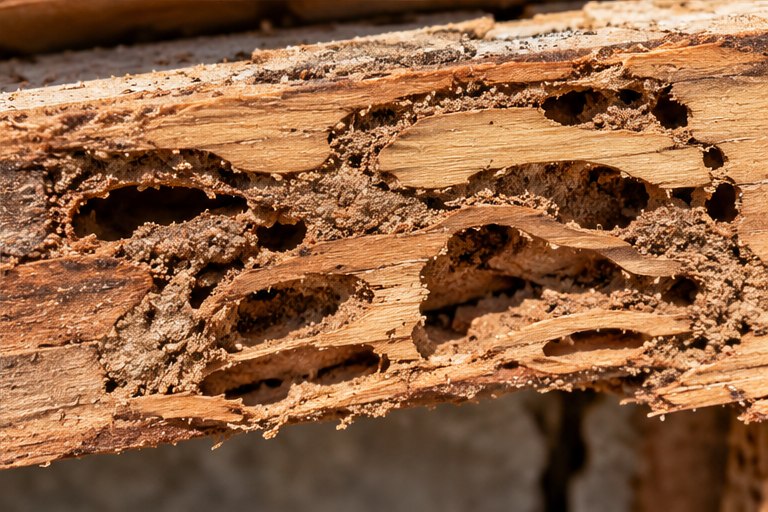
Illustrative example of interior tunnels and damaged wood; damage has multiple possible causes. AI-generated educational illustration; not a photograph of a Rhino Exterminating job.
Subterranean termite activity can be concealed inside timber. Soft spots, damaged trim, or unexplained deterioration may have several causes. Avoid assuming termites are responsible without professional evaluation.
What live subterranean termites can look like
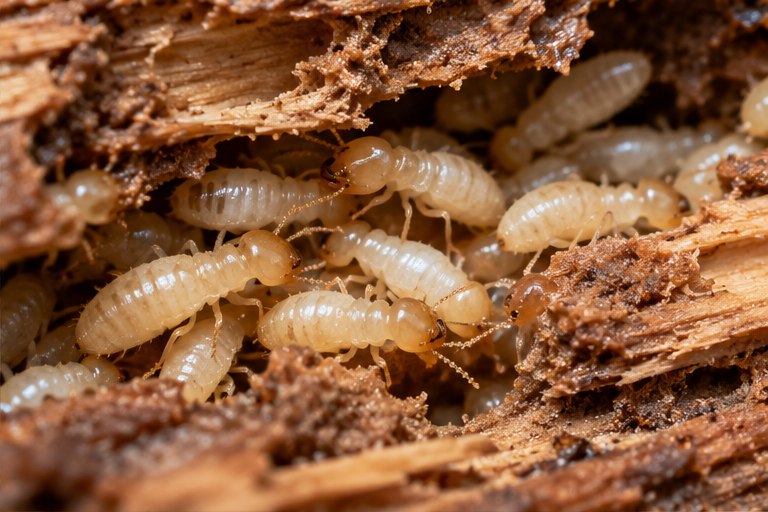
AI-generated educational illustration of pale termite workers inside wood; not a substitute for species identification.
Subterranean termite workers are typically pale and soft-bodied. Not every pale insect is a termite; save a clear photograph for a licensed professional.
What to do if you spot a warning sign
Photograph the location, note when you first saw the issue, and avoid disturbing evidence before an inspection. Share any prior treatment paperwork and warranty information with your inspector.
Free Arizona homeowner resource
Was your home treated for termites before? Check Arizona's TARF records.
The Arizona Department of Agriculture maintains a public Termite Action Report Form (TARF) search. Reported termite treatment actions and certain wood-destroying insect inspection reports may help you identify prior service dates and the licensed company that performed the work.
- Open the official Arizona termite history portal.
- Search by the property's street number and part of the street name; try a shorter address if the full address returns no match.
- Review any matching records for the reported action date, treatment or inspection type, and service provider details available.
- Contact the provider for the original service paperwork, coverage details, and any warranty status. A record alone does not establish a current warranty.
Important limitation: The state's current public TARF search is limited to approximately the last three years of records. A missing record does not mean a property was never treated or is termite-free; not all follow-up activity triggers a new TARF filing.
Search Arizona termite records ↗Official source: Arizona Department of Agriculture – Termites. The TARF site may require browser cookies.
Suspect termites? Request an assessment before choosing a treatment.
Rhino Termites handles inquiries. Inspection and treatment services are provided by Rhino Exterminating, Arizona pest-management business license #9665. Service availability, proposed treatment and warranty terms are confirmed by the provider.
Request a termite consultation Call nowMore termite resources
General information only. This page is not an inspection, diagnosis, treatment recommendation, or contractual advice.